Berlinale 2017, Day 4 (Test pilota Pirxa)

After a very long Sunday (lining up for tickets, have brunch, watch 3 films) my Berlinale week (Monday-Thursday) essentially consisted of a film in the morning and then another one or two in the evening. Unsurprisingly, I fell asleep during many of them, with this film being the first one. In retrospect it was a shame, and I have the suspicion that falling asleep actually made me appreciate the film more than I maybe would have otherwise, because the others who attended it (Loris, Danish dude) did not seem to be big fans of it. As a result, the insecurity over what to think about this film combined with my falling asleep actually made it harder for me to blog this film than “Letters from a Dead Man” where I had anticipated it would be tough.

This is also the only film that I placed into the “after O comes home from daycare and before he goes to sleep” time slot which I normally try to spend at home, because I really, really wanted to see it. My dad was very nice and came home early from work, but then it took me almost 1 hours 45 minutes to reach the movie theater, and I got there 5 minutes before the screening started.

drrt

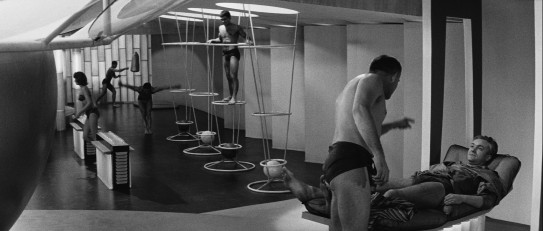
Test Pilota Pirxa (Pilot Pirx’s Inquest)
Poland/USSR 1979, Marek Piestrak, 99′

As human-like androids (“nonlinears” as they are called in the film) are being built, it is being discussed whether they should be allowed for mass production. In order to test whether the nonlinears are capable of replacing humans, Commander Pirx is sent with a 5-man crew to Saturn and tasked to make a recommendation on whether mass production of such robots is appropriate. Among these 5 men, some are human and some are nonlinears, but Pirx does not know who is what. When they reach Saturn, one of the nonlinear crew members tries to sabotage the whole operation and kill the human crew in the process…

First of all, I went into the film not really knowing what the story would be about, I just read “based on stories by Lem” and saw the title and that was enough for me to pick the film. I think I fell asleep when the committee decided upon giving Pirx this important task, and I woke up when the first guy started telling Pirx whether he was human or not (and make assumptions about what the others may be). This is the kind of premise or mystery that I am really, really into. I enjoyed the human-robot interaction, the crisis that the rogue robot provoked and this concept that human weakness ended up winning over the perfection of the robots.

I was also into the courtroom drama that came at the end. Loris thought that it was too much telling and not enough showing, but I didn’t notice that at all. The discussion was much about the nature of humans vs. robots and reminded me of that famous Data episode in Star Trek The Next Generation.

Unlike “Ikarie XB 1” and some of the other titles at the Berlinale which apparently were quite influential, “Test Pilota Pirxa” seems to be an utterly obscure title with pretty unimpressive visuals and a nice but not overly innovative story. As for me, I’m quite into said story. Moreover, It’s still bugging me that we never get to learn whether the awkward engineer was human or nonlinear. I know that his antics were primarily comic relief and of little consequence for the rest of the film, but I cannot help but wanting to know.

It amused me quite a bit to see that the film was a partially Estonian production, and very popular in Estonia where kids grew up with the film and fondly remember it as adults today. (As for me, I thought Arvo Pärt’s music made for a great accompaniment to the film.) I can definitely see how the film would be memorable for a 10-12 year old.

Maybe I fell asleep through the boring parts of the film, and maybe it is true that there are better ways to handle the human-robot interaction topic, but for me the film was perfectly suspenseful and enjoyable. Since it’s always pretty easy to motivate Pip to watch a sci-fi movie, perhaps I will have a chance to revisit this film one day.
Berlinale 2017, Day 4 (Up in the Sky)

This was quite an experience. I have never been in the Haus der Kulturen der Welt, and I was quite afraid I wouldn’t get there in time since you have to take a bus there (and the 100 bus is not exactly famous for being very punctual). Luckily I got a bus right away (and I caught the shuttle bus on the way back too). In the end I was there 25 minutes early and was able to get a very good seat, even though I was sitting inmidst of a crowd of children. It turned out that this was a good thing, because kids talk to their friends and so I was able to hear firsthand what they thought about the film. They would comment “oh it’s so cute!” about the little robot, laugh out loud many times and generally be very vocal about their thoughts (largely they were ecstatic and loved it to pieces).

The screening also came with a Q&A but I was too busy to stay for its entirety, which is especially sad for this film because I really enjoy the questions asked by children. (Actually I didn’t really stay for any Q&A’s this year at all because there were so many other things going on at the same time. By the time I got less busy, the Berlinale was almost over and there were no Q&A’s anymore.) I listened for a few minutes and learned that the film’s puppet characters were actually part of a children’s TV series and the director designed the puppets and originally trained as puppeteer. Also, the little girl who plays the main character seems really professional and ambitious, the kind who has always dreamed of making it big as an actress. I actually wanted to learn more about the film, and find these Q&A’s to be one of the most interesting aspects of the Berlinale overall, but I have no regrets.

drrt

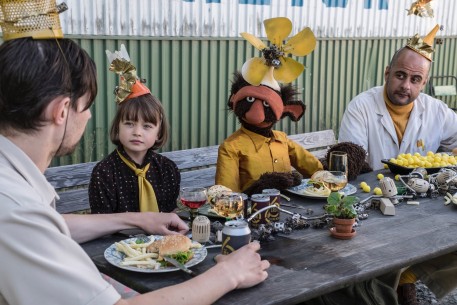
Upp i det blå (Up in the Sky)
Sweden 2016, Petter Lennstrand, 82′

Pottan’s parents are very busy and want to drop her off at a pony farm. Accidentally, she ends up at a recycling yard instead, where the team consists of a puppet who is supposed to be the boss but actually just talks a lot, an older puppet who likes to tinker with recycled things and a wanted criminal hiding out at the recycling yard. After they take in Pottan, she finds out that the chaotic but lovable group is trying to build a space ship, and soon they go on a quest to find a real rocket scientist to fulfill their dream.

Well, what can I say, “Up in the Sky” is the perfect children’s movie. It has wonderfully lovable, quirky characters tied together by a sweet friendship, even though or maybe because they all come with their own weaknesses. The film is funny, energetic and very knowledgeable about what children would get excited about in a story. Pottan is largely a generic main character, but she is not the kind of child adults imagine children would be like, but actually someone a child could relate to. Also, the kids in the audience especially loved the action-packed scenes in the second half of the film. Heck they even managed to work in a martial arts fighting scene.
I only found the busy parents a little over the top, because they go from completely not caring about her to suddenly becoming very attentive, but within a children’s movie this kind of exaggeration is fine, I suppose.

Did I ever mention that I think the name Pottan is really cute? I have a suspicion this cannot possibly be a real name, and a quick search on the internet suggests so as well.

I hope O will be ready for this film in a few years, and I think it’s actually a much more sophisticated and enjoyable film than most children’s films I have seen in the last few years. (Considering that just last year I saw “Zootopia”, “Finding Dory” and “Paddington”, this is quite a feat.)

Berlinale 2017, Day 3 (Ropaci, Ikarie XB 1)

As I mentioned before, I was pretty frustrated by not getting into “Droles d’oiseaux” which I kind of planned on but instead spent over three hours doing essentially nothing. I had a book with me but couldn’t really get into it, and shopping is strangely not fun when you are not in the mood for it. I was glad when that was over and my final screening of the day started.

drrt

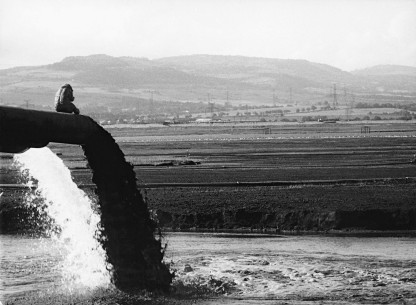
Ropaci (Oil Gobblers)
Czechoslovakia 1988, Jan Sv?rák, 22′

A team of 4 researchers and cameramen are looking for signs of a new species, the oil gobblers. They live in toxic smoke, eat rubber and drink petroleum, and in fact are only able to survive in polluted industrial environments.

I’d describe the film as satirical pretend documentary (I guess you call that a “mockumentary”), and as you may all know, I love quasi-documentaries like “District 9” and “My Winnipeg”. While I am often bored by actual documentaries, I really like it when I see a film playing with the medium and giving it a more or less fictional twist.

I never though that “Ropaci” was as laughing out loud funny as some people did in the audience, but it’s definitely a film that could have been longer and still be interesting. Apparently it’s become some sort of cult film, and it made quite an impact on the audience at the time because people actually took it serious. I thought that anyone who could take it seriously must have a pretty bleak outlook on society and technological development, but maybe people expected both the best and the worst of technology back in the day.

Other than that, I thought the film had a very clever premise, and despite not explicitly laughing, I found it enjoyable throughout the course of its short run.

drrt

Ikarie XB 1
Czechoslovakia 1963, Jind?ich Polák, 88′

Based on a Lem story, Ikarie XB 1 is a spaceship with 40 men on the way to Alpha Centauri looking for alien life. First, they stumble upon an empty spaceship from a long time ago, then they all fall sick because a dark star is drawing out their energy and finally, one of them has a mental breakdown and he threatens the life of the entire crew.

First of all, I thought it was notable how incredibly stylish the film was. Much like “Himmelskibet”, its production values are impressive and the sets, the character and costume designs are absolutely impeccable. I can see how the film inspired Kubrick for “2001” because this is such an unabashedly pretty film. It also comes with psychedelic music and a very good-looking dance and party scene.

When it comes to the substance, however, I thought the film had very little of it compared to other highly acclaimed science-fiction films of the time. Even Eolomea, the almost satirical comedy, is serious about the questions it’s asking. Ikarie XB 1 is largely an adventure story, and it took me awhile to realize that it is almost a slice of life that moves from one little challenge to another little challenge throughout the film. For me, it probably would have worked better as a mini-series with each episode focusing on one of the adventures of the crew. Thinking about it, “2001” is a little bit like that too (it is subtitled “odyssey” for a reason). However, I think nothing can really compare to “2001” since that one is ultimately a unique and wacky film, much unlike Ikarie XB 1 whose story is comparably more generic.

The film ends on a very hopeful, positive note with a baby being born and the crew realizing that benevolent aliens must have helped them to get out of the grip of the dark star, so the film actually manages to have a kind of conclusion after being quasi-episodic for so long. I thought that was a nice idea, just like watching the film was generally very satisfying.

Berlinale 2017, Day 3 (Letters from a Dead Man)

The best thing about having two films back to back at CinemaxX 8 is that they let you stay in the theater, and you just show them your ticket for the next film while inside. That way you are guaranteed to get your preferred seat because each time, only around 5-6 people end up staying. Actually I have never had a chance to try this at any other venue, but whenever I can, I jump at the chance to catch two Retrospektive films in a row. I almost went for four of such films, but realized that this may be too crazy after all (though “Strange Days” seems to be an interesting movie).

This is the first film I saw with somebody this year (if you don’t count that random meeting with Danish dude). Pixelmatsch didn’t really have much time nor the energy to attend, and neither Shii nor 6451 came to Berlin. As a result, this Berlinale was sadly not its usual social event for me, although I did end up catching a total of 6 films (I think?) with Loris this year.

Let me preface this review with a disclaimer: I am really eager to stick to my “4 postings per evening” rule this time (for those evenings where I am home and able to blog), because normally “Letters from a Dead Man” is the typical kind of film that sends me into a writer’s block. This year, however, I am trying to avoid spending a month blogging the Berlinale by not over-thinking the blogging. Even though I want to spend time reflecting upon the films, I don’t want to write my afterthoughts after all those fresh feelings are over and I only remember half of what had happened. And hey, I can still add things to the postings later after all.

drrt

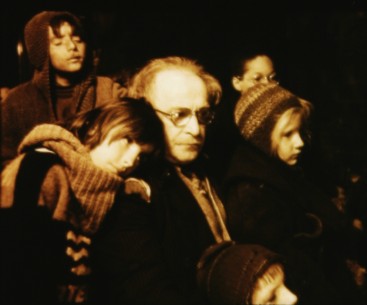
Pisma mjortwowo tscheloweka (Letters from a Dead Man)
USSR 1986, Konstantin Lopuschanski, 87′

A nuclear catastrophe made the world unlivable. The main character, a professor ridden with guilt because his research contributed to the catastrophe, lives with a bunch of co-workers in the basement shelter of a museum. Soon, people are being moved to the central shelter but they won’t take the old and sick, so the professor is left behind with a few orphaned children. During all this time, he writes letters to his missing son reflecting upon what is happening around him.

I want to say “OK this was the most depressing film of the Berlinale ever”, but that was before I saw “O-bi, O-ba”, which was even more devastating because I inexplicably expected a black comedy with more funny scenes and less, uh, desperation. Truth to be told, “Letters from a Dead Man” is totally unbearable, even though it clocks in at less than 90 minutes. (Pip’s rule that films tend to be crappy when they have a runtime of 1 1/2 hours instead of 2 hours do not typically hold for films running at the Berlinale for sure.) I’m pretty sure that somewhere between minute 60 and 80 I could not stand the film anymore, though I decided not to look away (unlike when I saw “Snowpiercer”) because I found it worthwhile to experience the film as a whole. Nevertheless, the film consists entirely of a world that has turned bad, and it only gets worse, and worse, and worse. You can sense how strong the fear of a nuclear winter must have been at the time the film was made, whereas from today’s perspective it baffles my mind that anyone could even imagine the decline of humanity to look like this.

Overall, the film was one of the most visually striking Berlinale films I have seen and also the most thoughtful and carefully crafted. You can tell that the director has worked with Tarkovsky before, and the script, even down to the way the dialogues are written, just screams Strugatsky at you. Just thinking about it gives me goosebumps, and I am not sure I could handle another film based on something by the Strugatskys. I may even have chosen not to see the film if I knew what was awaiting me.

The film’s most devastating and most interesting aspect is its treatment of children (notably almost completely absent from “O-bi, O-ba”). Perhaps one of the hardest scenes to watch was the one where the professor tries to get into the sick children’s ward to find his son. On the other hand, I noticed immediately that the orphans were very pretty. Considering that everything and everybody else is old and ugly, the orphans are dressed cutely (as much as it is possible to look cute in dirt rags) and all have beautiful faces. It seems like a non-sensical unrealistic choice for a bleak film like this and at the end we finally learn that these children were crucial to the film’s ending. Because those children were so beautiful, I would interpret this ending as a hopeful and positive one, while the film overall is not exactly supposed to be realistic but an allegory of humanity itself.

In many aspects I think this film is a masterpiece, but its bleakness makes me reluctant to recommend it to anyone. I definitely did not enjoy it, not in the usual sense of enjoyment (hence you will see it relatively far down on my ranking despite my claim that the film is a masterpiece), but this is definitely the kind of film that makes me glad the Berlinale exists and gives you the opportunity to see something like this on the big screen.

Berlinale 2017, Day 3 (Himmelskibet)

Day 3 marks an amusing shift in this year’s Berlinale. It was one of the most interesting days which I have been looking forward to (I saw 3 films in the CinemaxX 8 almost in a row), but spending the entire day with the Berlinale (starting with buying tickets in the morning) and having failed to get into one film (Droles d’oiseaux) actually dampened my enjoyment of the Berlinale overall. Every year something frustrating will happen at the Berlinale, but typically this lasts only a day or so. In this case, a fantastic film the next day (Upp i det bla) made me all but forget the frustrations of the day before.

Actually buying tickets was fun on that day, because I met up with the old man from two years ago who got there earlier than me, so being 5th in line, we were easily able to get all the films we wanted. The other fun occurrence of the day was that I got into a conversation with the person standing in line after me when we waited to be let into the movie theater for “Himmelskibet”, and we ended up chatting and meeting up several more times over the course of the Berlinale. Seems like the Berlinale is really turning into an event during which I randomly meet people!

Yet again, the cinema was packed for this screening. I asked aforementioned person why he chose to attend the screening and he said he was Danish and wanted to see the Danish offerings at the Berlinale (so he shall be referred to as Danish dude from now on). As for me, I chose the film because it’s a silent film with Stephen Horne’s live accompaniment, of course.

drrt

Himmelskibet (A Trip to Mars)
Denmark 1918, Holger-Madsen, 90′

I can see why the person introducing the film seemed so proud of their restorative work on the film, and why he felt compelled to excuse the film’s absurd airplane-rocket (this is probably because neither he nor the audience have ever heard of the term “steampunk”). On the one hand, “Himmelskibet” looks outdated and comes with an absurdly one-dimensional story and even more cookie-cutter characters than “Algol”. On the other hand, it’s actually a surprisingly well-made film for being one of the first of its kind, and there are many grand scenes and aereal shots suggesting that there was incredible monetary support for the film. For being so outdated looking, the Martians actually look awfully much like the hippies that came almost 50 years later.

The other thing “Himmelskibet” has going for it is that it’s a pacifist WWI film without being so obnoxiously nationalistic and misguided as “J’accuse”. This film is a straight-forward utopia fantasy where the aliens are portrayed as 100% wonderful and ready to come save the Earthian world from all its perversions. It’s only when keeping in mind that WWI was still raging when the film was made that the over the top simplicity of the film’s story makes sense. This is perhaps a film that must be viewed from its history more than most other films, but within its context, it actually conveys a sweet message that we simply have trouble accepting nowadays, maybe because we now have lost that innocence and hopefulness. History may repeat itself, but utopic ideologies probably don’t.

On a side note, I realize I haven’t seen a Danish film in forever. Back in the day, I was really into the Emolars movies, I loved “Festen” and “Adam’s Apples”, and then Gorp got me into seeing some Dreyer films, but I still have not seen “Häxan” nor “Babette’s Feast” which I had been planning to forever, and none of the Dogme 95 directors seem to be doing anything interesting anymore.

Berlinale 2017, Day 2 (Algol. Tragödie der Macht)

Whenever the Berlinale shows a silent film, they will have Stephen Horne accompany it with live music and therefore I will try to attend to screening no matter what the film is about. (In this case, though, the appearance of Emil Jannings as main character is another compelling reason to see the film.) If a film is boring or crappy I will just watch Horne play, though “Algol” was actually gripping enough such that I rarely paid attention to how Horne was doing the accompaniment, though I wish I did.

Being the second day of the Berlinale, the cinema was packed but as a single person it’s almost always possible to get a decent seat anyways, because people never completely fill them up, at least not at the CinemaxX 8. This is different at the Zoo Palast; for some reason the middle rows are always completely packed even when you get there reasonably early, and people have a tendency to reserve seats for 2-3 others, which they barely do at any of the other venues. Perhaps it’s because the Zoo Palast is a large and bright cinema? Who knows.

One thing I noticed pretty strongly at this year’s Berlinale Retrospektive was that almost every film was preceded by an introduction in which somebody will reference Trump, and how “Future Imperfect”, the topic of this year’s Retrospektive, was relevant to the political developments in the world. With “Algol”, the restaurateur mentioned how all of a sudden everybody wants to screen the film because its main character was so Trump-like. I thought that was amusing yet a bit silly. Is an old film really only interesting when it is somehow comparable to today’s situation?

drrt

Algol. Tragödie der Macht (Algol. Tragedy of Power)
Germany 1920, Hans Werckmeister, 104′

Algol, an alien from the planet Algol, disguises himself as coal miner and gives his fellow comrade Robert Herne a perpetuum mobile with which he takes over the entire world. He makes his own country incredibly rich by selling energy from his machine to other countries who in turn must work like crazy to be able to afford it. Only his former girlfriend and a handful of others are able to resist his take-over.

Much like “Metropolis”, I remember that I thought “Algol” was very stylish yet a bit naive. But then I saw “Himmelskibet” and realized that there are many levels of naivety when it comes to the story of a science-fiction film. Of course all of these films come from a different time when the typical science-fiction topics have just barely been explored. As a result, “Algol” has pretty cookie-cutter characters: The main character who goes from hard-working factory worker to evil dictator, the useless son who just wants power, the kind-hearted women (former girlfriend, wife, daughter) trying to stop him and finally Algol, the evil alien who always walks with a hunched back and hunches similarly over his books. (Oh yeah, the film really loves workers and seems to hate intellectuals, which makes “Algol” one of the less likable Retrospektive films in terms of its message.)

What attracted me towards the film was definitely its style and partially also its execution. I thought it was pretty well-made for a film from 1920, and the expressionist style interior spaces are downright amazing looking. Even though there were components of the story I was not into and from today’s perspective the story itself is predictable and straight-forward, the story-telling itself was actually quite compelling. I enjoyed Herne’s development from mere worker to world dictator, probably thanks to Janning’s apt portrayal of this character. With that in mind, I am certainly glad that the film has been restored, though sometimes I wonder what other gems there are in this world that are lying around, possibly lost forever.

Berlinale 2017, Day 2 (Bihttoš, Kaisa’s Enchanted Forest)

I have never actually seen a film in the NATIVe section before. This year, there is a focus on the arctic region and the groups of people living in those cold areas. I was drawn to these two films because they had animated components in them (I am such a sucker for that), and because they seem to be very personal stories by female film makers. The director for “Kaisa’s Enchanted Forest” was actually present, and she is this cute lady dressed in a Sami-inspired blouse and skirt (which is OK and not cultural appropriation when she does it) who repeated several times how happy and honored she was to be at the Berlinale. It was a lovely showing overall.

drrt

Bihttoš (Rebel)
Canada/Norway 2014, Elle-Máijá Tailfeathers, 14′

Being the daughter of a Sami father and Blackfoot mother, the director tells the story of her parents and how she finally learned about her father’s history which led to his lifelong depression.

The animation in this film was OK, but nothing to write home about. Maybe I should just accept that a low budget typically doesn’t allow for very good animation, and perhaps my expectations for animation is just too high. Other than that, the story was lovely, but also nothing to write home about. The director’s family is definitely very special and unusual, and their lives are so tragically scarred by the fact that they are indigenous people. Even though the film was far from being in your face activist, the message was still strong. At the same time, narratively this was essentially like a woman telling her family’s life story in 10 minutes at a dinner party, so despite the actually interesting family background I am not surprised the film is merely a short film.

drrt

Kuun metsän Kaisa (Kaisa’s Enchanted Forest)
Finland 2016, Katja Gauriloff, 86′

Similarly to the preceding short film, “Kaisa’s Enchanted Forest” is a partially animated quasi-autobiographical film (in this case about the director’s great-grandmother) telling the story about Kaisa’s friendship with a Swiss writer who ended up helping the Sami people after they lost everything during WWII.

While I thought the film was very interesting, it was actually one of the few times at the Berlinale when I explicitly felt like the film was slow. This is notable because I usually avoid the slow artsy films at the Berlinale (or they don’t feel very slow to me because the slow pace matches my enjoyment of the film). A part of me really loves the film and its topic, and another part thought that it was strangely paced and at times almost boring because of that. I’m also not entirely sure what to think of Kaisa, which is actually a compliment to the film because it depicts her as just a human individual and not just some indigenous person without a specific personality attached. On one hand she is awesome, on the other hand you can tell that she’s “no angel” either, as the film says. In some aspects she reminded me of Vivian Maier who seems like she was an amazing woman yet somehow a monster at the same time.

I have to admit that I have an almost racist fascination with Sami people (which is another reason why I ended up in this screening). Just like how as a little child I had trouble understanding why Jewish people were ostracized and persecuted because in my mind they looked like Germans, I am surprised by the level of hostility towards the Sami because to my eyes they basically look like other white people. I learned through the film that they are Orthodox and of course have a very different culture from other Scandinavian ethnic groups, but I guess I just don’t have enough of an understanding to what makes a group of people treat another group badly when they could just as well co-exist in a friendly manner.

Just like before, I was actually not particularly into the sloppy and dark animated parts, though the story Kaisa tells is kind of cool. I think my favorite parts of the film were those in which you could see glimpses of Sami life, and I was deeply touched by the hardships they went through during WWII. So props to that movie for getting its point across.

Berlinale 2017, Day 1 (Eolomea)

“As the Berlinale ends, the Berlinale begins!” I like this sentence I used two years ago, because it describes this effect of my lingering thoughts about the Berlinale exactly. It’s like for awhile the Berlinale hasn’t really ended because I am still thinking about the films.

Attending this year’s Berlinale was something of a little miracle, and I didn’t expect I would only skip one Berlinale (last year’s) before being able to attend another one. The miracle is called life, because I am back in Berlin to bring a new one into the world. (It’s a crazy world right now, and when I stumbled upon the baby book entry “The president is…”, I got doubts about whether it’s a good idea given the circumstances, but there is always hope!) So here we are, another 10 days of film watching! One day, the goal is to catch an average of 4 movies per day, as opposed to 2.

This year, my Berlinale actually starts with the opening film of the Retrospektive, which came with a lovely introduction with the director and cameraman who enjoy telling funny anecdotes and some curator person from the MoMA who participated in choosing the films (tall, well-spoken Indian-looking guy who probably gave the best introduction to anything I have ever heard at the Berlinale). It took place at the always fantastic International (where they screened the film in its 70mm original!), and for the first time I intensely felt like the Berlinale was starting thanks to the great atmosphere in it. Perhaps lining up for several days for tickets also made me anticipate the Berlinale more, hurr hurr. This year I absolutely wanted to make sure I get to see the films I want to see, and getting up early and queueing for tickets actually allowed me to do that.

drrt

Eolomea
Deutsche Demokratische Republik 1972, Herrmann Zschoche, 82′

In far future where space travel is more advanced, several ships are disappearing close to the space station “Margot”. Our heroes are a blonde and exceedingly pretty female scientist trying to figure out the real reason behind the disappearances, and her lover, a very working class astronaut delivery boy with a good dose of sarcasm, who happens to be stranded on a little planet close to “Margot”. Both of them get involved in a trip to the “Margot” space station and happily meet there briefly, before finding out that it all relates to an old dream of finding alien life on a legendary planet Eolomea.

It was something like the perfect movie to start with. First of all, I am into its positive message and how much it values science. (I will definitely come back to this aspect when reviewing “gog” later on.) Back in the day, space travel and exploration was actually something people truly desired and were willing to sacrifice a whole lot for, wow! Nowadays people are just complaining why one would spend money on Curiosity when they could spend it on combatting poverty. (Nobody seems to ask that question about “normal” military spending though.)

Besides the question of how much dreams are worth sacrificing for, the film also injects some other typical questions about technology of the time, like the little robot who follows orders but has a conscience and is not sure if he should follow these orders if they are potentially putting humans in jeopardy. At the same time, the most unusual aspect about the film was its humor. Maybe it was a little silly and over the top (I’m thinking of a tense scene where they enter the space station and find it surpringly empty, but then a guy says “I need to pee” and someone else responds “Just deal with it”), but I enjoyed these small humorous scenes, probably because science-fiction films have a tendency to be much more serious, even the light-hearted ones. This one is totally not ashamed of its silliness and the fanservice-y outfits they put their main actress into, and I really liked the film for it. It’s especially nice to have a male main character who doesn’t take himself too seriously and cracks jokes all the time.

Apparently “Eolomea” did not garner very many good reviews back in the day (nor today it seems), but for me it was an enjoyable gem.

And a classic film, as always

This year’s PIFF was pretty short. We only visited Shii in Stockholm (or rather in Uppsala to be more precise) and with everybody more or less in the regular work force except for Shii and me, this was basically a week-end trip. As a result, we ended up sightseeing a little bit and watched less films. Hopefully next time we actually get to marathon films again, when the PIFF is tentatively slated for summer.

What Ever Happened to Baby Jane?

I will keep this one short. The bottom line is that I have absolutely no idea why this is a classic. I am a huge fan of both Bette Davis and Joan Crawford (much more the former though), and I think both of them gave a great performance, yet I was somehow not into the story (nor the characters) at all. Apparently it’s a cult novel, but it’s so obviously written by a man who does not look particularly kindly upon aging women. I don’t even have to delve into the absurdity of how Jane descended into madness, because ultimately books or movies don’t necessarily have to be hyperrealistic about the psychological mechanisms if it leads to an engaging story.

For me, Baby Jane didn’t really have that, so as a result this is the typical case in which I have enjoyed watching a film in friendly company, but the film itself was not that great. I am happy that it revived the careers of two great Hollywood stars, but I wished for them that it had been better roles.

It had no chance against “Ida” or “Leviathan”, but it’s better

We were relatively badly prepared for the PIFF this year. Usually we bring films with us and discuss what to watch beforehand, so even if we change our plans halfway (as we almost always do), we typically get an idea of what we will see. Not this time. It was only recently that I met with a friend who claimed “Wild Tales” was the best film of the last 5 years, and that prompted me to propose it for the PIFF while we were desperately looking for what to watch. It turns out the recommendation was spot on (though that claim with the 5 years is an exaggeration of course).

Wild Tales

I’ll give some short comments on each of the segments, but given that this is a black comedy, I cannot fully express why this movie is so surprisingly worth watching.

Pasternak

This one was impressively short but probably our favorite overall. Personally I had a thing for the very last sequence, but “Pasternak” is over the top funny, concise and simply perfect. Ranked no.2

Las Ratas

Perhaps the least outwardly funny of all the segments, I liked it for its unabashed vengefulness. If only you could get rid of the Trumps of this world like that, but there is a reason why “Inglorious Basterds” never happened. Ranked No.5

El mas fuerte

Speaking of the devil, this segment reminded me a little bit of what Tarantino would do, but Tarantino could never come up with the ending twist which made us all laugh out loud. Ranked no.4

Bombita

All of the segments have elements of social commentary, but this one is perhaps so the most. It would never be this funny in an US or a European film. Of course the respective Western countries come with their own absurd inefficient bureaucracies, but it would never ring so hilariously true if it wasn’t set in a somewhat inherently chaotic country. The satisfying vengefulness aspect reappears, and that might make “Wild Tales” the perfect escapist movie. Ranked no.3

La Propuesta

Being one of the longer segments (if I am not mistaken), this was perhaps by far my least favorite. It’s a hilarious take on corruption with a few great one-liners and twists, but not as exhilaratingly so as the other segments in my book, most likely because in this case, I can’t really relate to that world. Ranked no.6

Hasta que la muerte nos separe

No film can be without a love story, and what a love story this one is! It was also a very long segment, but I thought every escalation of the disastrous wedding was fantastic. Maybe because my family never has any open confrontations these eruptions have been almost cathartic, and the end felt absurd at first, but upon further inspection, it was absolutely right after all. They let it out and they are now even, so they can leave it all behind to focus on these feelings that were very much present the entire time. I think it’s a fabulous wedding. Ranked no.1